So, I got an iPad. iPad 2, to be precise.
But let me tell you, it was no easy feat.
It started just over a week ago. My parents returned from their trip to Las Vegas and my mom told me she bought me a present while they were there. So I showed up at my parents house, expected to be met with the usual: a t-shirt, maybe some jewelry. You can imagine my surprise when I opened the bag to find an iPad! And yes, also a conference t-shirt.
"Why did you get me this?" I couldn't help but ask. My parents always got me great gifts... for my birthday, Christmas and graduation. I didn't often get such an amazing gift unattached to any occasion.
"Because you're such a great daughter," my mom said, huge smile on her face. [Insert awww here.]
The iPad (first generation) also came with a gift certificate so that I could exchange and upgrade to the iPad 2.
I waited for iPad release day (Friday, March 25, 2011) with baited breath. I left work at 3 p.m. to get in line for the 5 p.m. release time.
The line up won't be so bad, I told myself. After all, this is Ottawa, not New York City or L.A.
And, of course, I was wrong. The line up stretched down the hall, through a long corridor that lead to a ramp - outdoors. But I was so excited I didn't mind. I tried to pass the time by reading my book, "The Brief Wonderous Life of Oscar Wao," and catching up on phone calls.
Eventually I made some line-up friends. A guy buying two iPads for himself and his wife; a woman with an e-book reader looking to upgrade her technology; and a lovey-dovey university couple getting matching iPads. The line continued to grow and the male half of the couple was interviewed by the local Ottawa news station. As soon as the line started to compress and we made it inside, the excitement begun. The Apple staff hyped up the crowd at around 4:50 by running to the back of the line, shouting and clapping in t-shirts, then running back into the store.
At around 5:45 I made it to the front of the line. A guy was giving out tickets to reserve the iPads and I got a ticket for exactly the one I wanted: a 16GB white iPad with Wi-Fi + 3G. I was met at the front door and matched with my salesman, and in the span of a few seconds he had my iPad in hand and I'd picked out my baby blue Smart Cover and SIM card.
"I'm tax exempt," I declared, and I could see the brief annoyance cross his face. I hesitated, "And I have to do an exchange. And to make things more complicated, it was purchased in the U.S."
"You can't exchange it in Canada," he said quickly.
I felt the air knocked out of me. As dramatic as it might sound, it felt as if my world was crashing down on me. The anticipation had been building all week, and increased four-fold as I waited in line. I left the Apple store completely dejected. My mom met me for pad Thai (ironically) as a consolation, and I felt horrible being so depressed about her wonderful gift.
"I have a confession," she said suddenly. "I didn't buy the iPad. I won it at a conference."
And we laughed. Laughed until tears stung our eyes.
This still didn't change the fact that I wanted an iPad 2! After hours (literally) deliberating with my mom over how to exchange the iPad within the two week exchange period, my boyfriend, R.J., said to me, "Let's just hop in the car and drive to Syracuse." That's why I love him.
Cut to 2:30 a.m. Saturday, March 26.
We wake up, groggy but slightly excited. Stop at my mom's to pick up a thermos of coffee and scrambled egg sandwiches. Stop to pick up R.J.'s younger brother, Fur, who decided to accompany us on this spontaneous road trip. And we were on our way to upstate New York.
After a Dunkin Donuts pitstop and a few early morning laughs, we arrived at the Apple store in Syracuse's Carosel Mall. As we'd been warned by the salesman my mom spoke to on the phone the previous night, there was already a lineup at 6:30 a.m. I was tenth in line. I knew I had good chance, but that there was no guarantee.
9 a.m. rolled around and out came the ticket man. My heart rate sped up a little, recalling the experience only hours earlier.
When the ticket man came to me he said, "We only have 64GBs left." My heart sunk. I knew it was much more expensive and that I had to make a quick decision.
"I'll take it!" I said. What the heck? I'd waited in two line ups for a total of over 5 hours and was making a 6 hour roundtrip. Surely nearly 12 hours of my life is worth an extra 48GBs? (I bet none of our ancestors in moccasins thought we'd ever be using such a measurement.)
So I left the store with my black 64GB Wi-Fi + 3G (la creme de la creme), baby blue Smart Cover and Apple Care. And I haven't looked back.
Thursday, March 31, 2011

Sunday, March 20, 2011
One-Minute Book Review: The Moon of Letting Go
 The Moon of Letting Go and other stories (Richard Van Camp)
This book was given to me as a gift by a professor who requested that I speak to her Native Lit class about my master's research. A pretty awesome gift, especially considering that I read and loved Van Camp's coming-of-age novel, The Lesser Blessed.
These short stories are divided into four sections: Healing, Medicine, Teachings and Love. While the stories don't shy away from the grit and grind of rez and urban Indian life, many of the stories have happy endings (or maybe just endings I've interpreted as happy) and show that there can be a good outcome for someone who might typically be called "the bad guy."
Being the hopeless romantic that I am, I loved the three stories in the last section, 'Love.' But, I was particularly struck by the title story, "The Moon of Letting Go" (from 'Medicine'). It's the story of a mother and son, estranged from the other members of their family--an ex-husband and two sons--who get "accosted" by the last medicine man in their community, known and feared for practicing black magic. The line between black and white, good and evil is blurred as the mother and son spend time with the mysterious medicine man, moving forward with a weary trust and belief.
It reminded me of this one time I personally came into contact with some black magic, but I'll save that story for another time.... (Ellipses are so Van Camp.)
Wednesday, March 9, 2011
40 Days & 40 Nights
I don't consider myself religious per se, but I am spiritual. Add to that the facts that my parents are semi-practicing Catholics (my mom goes to church every Sunday and my dad on Easter... sometimes) and my grandmother is traditional, and you get me! A veritable mishmash of religious and spiritual practice.
One thing my family has always happily practiced is Mardi Gras, a.k.a. Fat Tuesday.

For those of you non-Catholics (or non-Christians?), this means stuffing your face, particularly with pancake feasts in my experience, and being completely indulgent before beginning Lent: giving something up for 40 days and 40 nights. And sure enough, 2011 proves no different. I stopped in at my parents on my way home from work last night and enjoyed three pancakes topped with blueberries, strawberries, bananas and fresh whipped cream. Yum!
My weakness (and subsequently, my waistline's) is sweets. I love ice cream, birthday cake, apple pie, Rice Krispie squares, you name it! So, I figure this so-called Lent is a good opportunity for me to give up sweets, in some way, shape or form, with a little extra motivation/guilt attached to it.
So this morning I decided to give up "cake- and pie-type" desserts. Only then I stopped by Starbucks after lunch and saw this:

Cute, delicious cake on a stick.
So is it a cake or a lollipop? I wonder, as I let two people go ahead of me in line as I contemplate my decision. It hasn't even been 24 hours! You're stronger than that.
"I'll have a Skinny London Fog," I order, with only a slight grumble in my voice.
I've made it too easy on myself. A slice of key lime pie could qualify as something more tarte-like and what the heck is tiramisu, anyway? And oh, the Cake Pops!
I needed a bigger challenge, so here it is...
For 40 days and 40 nights I will not touch a drop of chocolate.
No chocolate bars, no mocha lattes, no Fudgesicles, no chocolate chip cookies. (Unless the cocoa content is 70% or higher because then it's heart-healthy, right?)
Wish me luck. I will need it.
One thing my family has always happily practiced is Mardi Gras, a.k.a. Fat Tuesday.

For those of you non-Catholics (or non-Christians?), this means stuffing your face, particularly with pancake feasts in my experience, and being completely indulgent before beginning Lent: giving something up for 40 days and 40 nights. And sure enough, 2011 proves no different. I stopped in at my parents on my way home from work last night and enjoyed three pancakes topped with blueberries, strawberries, bananas and fresh whipped cream. Yum!
My weakness (and subsequently, my waistline's) is sweets. I love ice cream, birthday cake, apple pie, Rice Krispie squares, you name it! So, I figure this so-called Lent is a good opportunity for me to give up sweets, in some way, shape or form, with a little extra motivation/guilt attached to it.
So this morning I decided to give up "cake- and pie-type" desserts. Only then I stopped by Starbucks after lunch and saw this:

Cute, delicious cake on a stick.
So is it a cake or a lollipop? I wonder, as I let two people go ahead of me in line as I contemplate my decision. It hasn't even been 24 hours! You're stronger than that.
"I'll have a Skinny London Fog," I order, with only a slight grumble in my voice.
I've made it too easy on myself. A slice of key lime pie could qualify as something more tarte-like and what the heck is tiramisu, anyway? And oh, the Cake Pops!
I needed a bigger challenge, so here it is...
For 40 days and 40 nights I will not touch a drop of chocolate.
No chocolate bars, no mocha lattes, no Fudgesicles, no chocolate chip cookies. (Unless the cocoa content is 70% or higher because then it's heart-healthy, right?)
Wish me luck. I will need it.
Thursday, March 3, 2011
Outfit Fit for a Chief
I've always loved fashion, but never been one to fret over what I wore.
When I was a girl living on the rez, I would walk to the K.Z. Store to get the latest Seventeen or YM magazines and plow through them, entranced by the glossy pages that featured beautiful girls, interesting makeup that I longed to touch and, above all, fashion. In fact, I was so into the industry back then that in sixth grade I am quoted in the yearbook saying that my greatest goal in life was to shop at the world's biggest mall: the Edmonton Mall. (Which I've achieved, in case you're wondering, twice-over. Guess I'll have to find a new purpose for life.)
That being said, I never worried too much about clothes. I have confidence in my fashion sense (stick with the classics with a sprinkling of trends is my motto) and I've always seemed to have enough luck at being neither under- nor over-dressed.
But, I have a big day at work next week and... I don't know what to wear!
I am proud to say that I've been liaising between members of my community and the university where I work to form and foster a tangible, mutually-beneficial partnership. On Tuesday, our Chief and Director of Education are coming to the university for three meetings and a lunch, and I will be there throughout the day.
So I've narrowed it my outfit choices down to four options:
1. The Suit

You can never go wrong with a classic black suit, right? Not necessarily. Our Chief dresses well, but I can't remember ever seeing him in a full suit and tie. He's more of the ribbon shirt and vest type.
Although I think dressing to the nines to show that a Chief commands that level of respect is important, a suit might also give the impression that the university is a stuffy, pretentious kind of place, so it's not my #1 choice.
2. The Tailored Dress

This dress is only ever-so-slightly less casual than the suit because it's equally structured. But it seems to convey a much less... stuffy, for lack of a new word, message. I'm liking this option, partially because it's my lucky interview dress! And I have a hot pink skinny belt that I can wear with it to add a little flair.
3. The Cardigan

Now we're moving into the more casual options. This outfit - black pants and a gray cardigan - is something I would wear to work any day of the week. I consider it one of those outfits where you can't go wrong. It looks professional enough for a last minute meeting, but it's not so serious that I couldn't still relate to students. But, for this purpose, I'm a little lukewarm on the cardigan.
4. The Wild Card

Although this type of outfit might be a little too laid back, I keep gravitating toward it for some reason. It's a fitted blazer that's made of gray jersey (sweatshirt-like) material. I don't think I could wear it with anything other than jeans, and I don't think denim would be appropriate. So, maybe I shouldn't be considering it, but I can't help it! This cardigan is fun, friendly and fresh.
I'm so glad that I have the weekend examine these four options more carefully before I make this very important decision!
When I was a girl living on the rez, I would walk to the K.Z. Store to get the latest Seventeen or YM magazines and plow through them, entranced by the glossy pages that featured beautiful girls, interesting makeup that I longed to touch and, above all, fashion. In fact, I was so into the industry back then that in sixth grade I am quoted in the yearbook saying that my greatest goal in life was to shop at the world's biggest mall: the Edmonton Mall. (Which I've achieved, in case you're wondering, twice-over. Guess I'll have to find a new purpose for life.)
That being said, I never worried too much about clothes. I have confidence in my fashion sense (stick with the classics with a sprinkling of trends is my motto) and I've always seemed to have enough luck at being neither under- nor over-dressed.
But, I have a big day at work next week and... I don't know what to wear!
I am proud to say that I've been liaising between members of my community and the university where I work to form and foster a tangible, mutually-beneficial partnership. On Tuesday, our Chief and Director of Education are coming to the university for three meetings and a lunch, and I will be there throughout the day.
So I've narrowed it my outfit choices down to four options:
1. The Suit

You can never go wrong with a classic black suit, right? Not necessarily. Our Chief dresses well, but I can't remember ever seeing him in a full suit and tie. He's more of the ribbon shirt and vest type.
Although I think dressing to the nines to show that a Chief commands that level of respect is important, a suit might also give the impression that the university is a stuffy, pretentious kind of place, so it's not my #1 choice.
2. The Tailored Dress

This dress is only ever-so-slightly less casual than the suit because it's equally structured. But it seems to convey a much less... stuffy, for lack of a new word, message. I'm liking this option, partially because it's my lucky interview dress! And I have a hot pink skinny belt that I can wear with it to add a little flair.
3. The Cardigan

Now we're moving into the more casual options. This outfit - black pants and a gray cardigan - is something I would wear to work any day of the week. I consider it one of those outfits where you can't go wrong. It looks professional enough for a last minute meeting, but it's not so serious that I couldn't still relate to students. But, for this purpose, I'm a little lukewarm on the cardigan.
4. The Wild Card

Although this type of outfit might be a little too laid back, I keep gravitating toward it for some reason. It's a fitted blazer that's made of gray jersey (sweatshirt-like) material. I don't think I could wear it with anything other than jeans, and I don't think denim would be appropriate. So, maybe I shouldn't be considering it, but I can't help it! This cardigan is fun, friendly and fresh.
I'm so glad that I have the weekend examine these four options more carefully before I make this very important decision!
Wednesday, March 2, 2011
Role Models, Part II
We arrived in Boston late night on a Wednesday after some trials and tribulations, including one speeding ticket - before we even left home - and an iPad that wouldn't turn on. My voice was hoarse because in the absence of our e-book (Malcolm Gladwell's Blink, which was on the iPad), I decided to e-read my research essay, '"But it's our story. Read it": Stories My Grandfather Told Me and Writing for Continuance,' to R.J.
We stayed at the John Hancock Hotel, which I'd recommend to anyone who wants to stay in Back Bay on a budget (but be warned, it's a little *ahem* rustic). We settled in and went straight to bed, excited for what the next day would bring.
The alarm rang at 7 a.m. and I woke with a start. Normally, I'd hit snooze least three times, especially on vacation. But not this day! We got ready and headed to the Starbucks on our hotel's block, but I didn't need the caffeine. Already, my heart was pumping and my legs were shaking.

Although I did my best to hide it with a smile.
We boarded the T (Boston subway system that R.J. takes great pride in navigating) and got to Harvard University an hour early. Just enough time to take a stroll around Harvard Square and try - fruitlessly, I might add - to calm my nerves.


By the time 11:25 a.m. (t-minus five minutes) rolled around I could barely catch my breath.
What if I'm not smart enough? I wondered. What if I can't hold a conversation about her book? What if there are awkward lulls in the conversation? R.J. reassured me that things would be all right, but I was about to meet my academic role model - what if things didn't go perfectly?
By the time we walked into the Faculty of Arts & Sciences building and turned the corner toward her office, my heart had officially entered my throat. But as I passed her nameplate and knocked on her office door - knowing I couldn't turn back now - a wave of calm washed over me. Upon seeing her face, her height (tall) and her birchbark canoe earrings I could tell immediately that she wasn't the type of Harvard Professor I'd worked her up to be. Above all else, she was Native. And a woman. And an academic. A Native woman academic - kind of like me!
From that moment on our conversation flowed freely. Our first stop on the Lisa Brooks tour of Harvard was the plaque that comemmorated the original building that was Harvard College, its first Native graduates and its mandate (recorded in their Charter) for the education of Indians:

We had lunch with the Harvard University Native American Program's (HUNAP) Liaison & Recruiter, Jason, then headed up for a tour of HUNAP. Although I didn't view myself as a prospective student, they treated me in that way, which was very kind and flattering. We spent the afternoon chatting with a great mix of staff, students (grad and undergrad) and alumni. Of course R.J. and I couldn't leave without one cheesy tourist photo:

We stopped at the gift shop, the Coop, where I bought a couple of baby things for a friend who's expecting. No pressure or anything, unborn child. Then we said goodbye to Harvard.
R.J. and I celebrated the amazing day with Thai, wine and dessert to go (our guilty pleasure!).
The next day, Friday, we went for dinner at Lisa's home outside of the city. That part of the trip was so amazing, I believe that neither my words nor photos could do it justice.
But I'll say this much: we had a great kitchen table conversation.
We stayed at the John Hancock Hotel, which I'd recommend to anyone who wants to stay in Back Bay on a budget (but be warned, it's a little *ahem* rustic). We settled in and went straight to bed, excited for what the next day would bring.
The alarm rang at 7 a.m. and I woke with a start. Normally, I'd hit snooze least three times, especially on vacation. But not this day! We got ready and headed to the Starbucks on our hotel's block, but I didn't need the caffeine. Already, my heart was pumping and my legs were shaking.

Although I did my best to hide it with a smile.
We boarded the T (Boston subway system that R.J. takes great pride in navigating) and got to Harvard University an hour early. Just enough time to take a stroll around Harvard Square and try - fruitlessly, I might add - to calm my nerves.


By the time 11:25 a.m. (t-minus five minutes) rolled around I could barely catch my breath.
What if I'm not smart enough? I wondered. What if I can't hold a conversation about her book? What if there are awkward lulls in the conversation? R.J. reassured me that things would be all right, but I was about to meet my academic role model - what if things didn't go perfectly?
By the time we walked into the Faculty of Arts & Sciences building and turned the corner toward her office, my heart had officially entered my throat. But as I passed her nameplate and knocked on her office door - knowing I couldn't turn back now - a wave of calm washed over me. Upon seeing her face, her height (tall) and her birchbark canoe earrings I could tell immediately that she wasn't the type of Harvard Professor I'd worked her up to be. Above all else, she was Native. And a woman. And an academic. A Native woman academic - kind of like me!
From that moment on our conversation flowed freely. Our first stop on the Lisa Brooks tour of Harvard was the plaque that comemmorated the original building that was Harvard College, its first Native graduates and its mandate (recorded in their Charter) for the education of Indians:

We had lunch with the Harvard University Native American Program's (HUNAP) Liaison & Recruiter, Jason, then headed up for a tour of HUNAP. Although I didn't view myself as a prospective student, they treated me in that way, which was very kind and flattering. We spent the afternoon chatting with a great mix of staff, students (grad and undergrad) and alumni. Of course R.J. and I couldn't leave without one cheesy tourist photo:

We stopped at the gift shop, the Coop, where I bought a couple of baby things for a friend who's expecting. No pressure or anything, unborn child. Then we said goodbye to Harvard.
R.J. and I celebrated the amazing day with Thai, wine and dessert to go (our guilty pleasure!).
The next day, Friday, we went for dinner at Lisa's home outside of the city. That part of the trip was so amazing, I believe that neither my words nor photos could do it justice.
But I'll say this much: we had a great kitchen table conversation.
Sunday, February 27, 2011
Role Models
Forget American Idol (although I am somewhat following it!), today I want to talk "Academic Idol"!
Yes, I'm a nerd. I spent two days last week at a workshop for Native youth (all women and girls) on "Values and Ethics in the Aboriginal Workplace." In addition to the usual where you're from, what you study, where you work, etc. in our round of introductions we were asked to name someone we look to as a role model.
Many mothers, grandmothers and great-grandmothers we named, as were Elijah Harper, Metis artist Jaime Koebel, and even a few politicians (no one from within the workplace, ironically).
When the line rolled around to me, I could feel my breath start to shorten a little. It seems no matter how many times I speak in front of a crowd, I always have at least a tinge of anxiety.
"My name is Mallory Whiteduck, I'm from Kitigan Zibi and I work at the university," I started, "and I'm having a hard time narrowing it down to just one role model. I guess I should consider myself lucky in that way."
I went on to explain how I admired my younger brother as someone who has strong values and a solid ethical foundation. But in reality, I have so many role models. I draw from numerous different people as I try to live a good life. My mom, my grandmothers and grandfathers, R.J., cousins, friends, my director, co-workers...!
But in the world of Native American literary theory (told you I was a nerd) and the scholarly Native world in general, Lisa Brooks is my academic idol.
[Rewind to Christmas Eve]
R.J. and I sit in his car after leaving my aunt's house, and he hands me a poorly wrapped present. I smile. I wasn't expecting much considering he's taken a year to return to academia. I excitedly tear it open to reveal Lisa Brooks's The Common Pot: The Recovery of Native Space in the Northeast.

Inside the book was a note that said he had emailed Lisa Brooks to invite her to a lunch with me in Boston (she's at Harvard) paid by him. I grinned form ear to ear at the thoughtfulness of the gift.
"She hasn't emailed back yet," he went on to explain. "But I only sent it a few days ago."
The holidays crept by without any updates. I was almost afraid to ask for any because I knew the answer would be no, she hasn't yet responded.
She's a Harvard professor, I rationalized, entering into self-preservation mode. I'm sure she doesn't have time for a lunch with some random "fan."
But after we came back home, got back to work and returned to some semblance of post-holiday reality, a message popped up in my inbox with the subject line "FWD: Inspirational Student for Christmas." R.J. had forwarded a response from Lisa Brooks where she not only happily accepted the invitation to lunch, but offered to set up a tour of Harvard's Native American Program and even invited us to share a meal with her husband and daughter at their home outside of Boston.
We returned from the trip on February 20 (my birthday!) and I'm still reeling with energy, excitement and inspiration.
Yes, I'm a nerd. I spent two days last week at a workshop for Native youth (all women and girls) on "Values and Ethics in the Aboriginal Workplace." In addition to the usual where you're from, what you study, where you work, etc. in our round of introductions we were asked to name someone we look to as a role model.
Many mothers, grandmothers and great-grandmothers we named, as were Elijah Harper, Metis artist Jaime Koebel, and even a few politicians (no one from within the workplace, ironically).
When the line rolled around to me, I could feel my breath start to shorten a little. It seems no matter how many times I speak in front of a crowd, I always have at least a tinge of anxiety.
"My name is Mallory Whiteduck, I'm from Kitigan Zibi and I work at the university," I started, "and I'm having a hard time narrowing it down to just one role model. I guess I should consider myself lucky in that way."
I went on to explain how I admired my younger brother as someone who has strong values and a solid ethical foundation. But in reality, I have so many role models. I draw from numerous different people as I try to live a good life. My mom, my grandmothers and grandfathers, R.J., cousins, friends, my director, co-workers...!
But in the world of Native American literary theory (told you I was a nerd) and the scholarly Native world in general, Lisa Brooks is my academic idol.
[Rewind to Christmas Eve]
R.J. and I sit in his car after leaving my aunt's house, and he hands me a poorly wrapped present. I smile. I wasn't expecting much considering he's taken a year to return to academia. I excitedly tear it open to reveal Lisa Brooks's The Common Pot: The Recovery of Native Space in the Northeast.
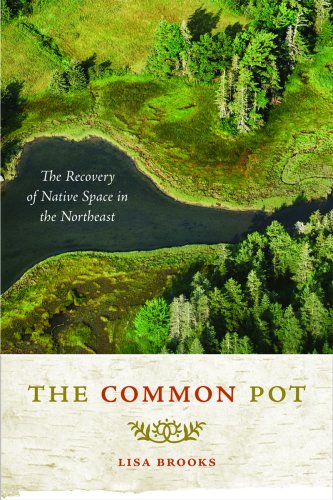
Inside the book was a note that said he had emailed Lisa Brooks to invite her to a lunch with me in Boston (she's at Harvard) paid by him. I grinned form ear to ear at the thoughtfulness of the gift.
"She hasn't emailed back yet," he went on to explain. "But I only sent it a few days ago."
The holidays crept by without any updates. I was almost afraid to ask for any because I knew the answer would be no, she hasn't yet responded.
She's a Harvard professor, I rationalized, entering into self-preservation mode. I'm sure she doesn't have time for a lunch with some random "fan."
But after we came back home, got back to work and returned to some semblance of post-holiday reality, a message popped up in my inbox with the subject line "FWD: Inspirational Student for Christmas." R.J. had forwarded a response from Lisa Brooks where she not only happily accepted the invitation to lunch, but offered to set up a tour of Harvard's Native American Program and even invited us to share a meal with her husband and daughter at their home outside of Boston.
We returned from the trip on February 20 (my birthday!) and I'm still reeling with energy, excitement and inspiration.
Saturday, February 5, 2011
Colonization. There, I said it.
Colonization is probably one of the most loaded words in Canada.
I think it makes Canadians uncomfortable. Actually - let me try that again. It makes Canadians who who understand the true history of this country uncomfortable. Which, arguably, is probably a smaller percentage of Canadians. Most think colonization is a thing of the past, reinforced by "post-colonial theory" and lack of use of the term in popular culture.
But, Canada's history of colonization makes some Canadians uncomfortable because it demands that they come to terms with the genocide and various other levels of atrocities wrought against our people by their Canadian/European ancestors. And people can get pretty fired up about their ancestors. I remember two friends in high school whose friendship quickly ended after an argument over what "her ancestors did to my ancestors" - and they were both of European descent.
But wait - what about those Canadians who don't connect with their ancestors? In other words, the Canadians who don't realize that they may have had the same values and beliefs that necessitate(d) colonization that their ancestors did, and instead distance themselves from family who didn't walk to earth in their lifetime. I would venture to guess that those Canadians think this comic is racist towards Canadians:
And yes, those Canadians are out there.
But of course, I can't leave out the number of Canadians who would find this comic hilarious. Those Canadians are the allies. The ones who understand Canada's history of colonization, but it doesn't make them uncomfortable. Rather, they feel the the impulse to attend rallies for Indigenous rights, major in "Aboriginal Studies" and sometimes even dedicate their lives to educating their fellow Canadians about colonization.
---
I didn't begin this post to try classify Canadians into various groups related to how they feel about colonization. But I believe that everything happens for a reason, so there you have it.
I meant to talk about my feelings about colonization. (For now at least, because it changes, and I think that's a good thing.)
I never gave much thought to colonization until, well, around 2007 when I started my M.A. I mean, before that I knew about the devastating impacts that residential schools have had on our people and I witnessed some of those effects first hand, but I never named it as 'colonization' or thought about the intersectionality of all of the issues in our communities.
After I was able to put the term 'colonization' to all of this, I felt *so* empowered. I threw the term around in essays and in speaking to friends at pubs. (I didn't so much throw it in the face of Canadians - despite my above 'manifesto' on Canadians and colonization, I actually have a pretty non-confrontational nature and it takes a lot for me to tell people things I know they don't want to hear.)
But then something changed.
Yesterday, on my drive to work, I tuned in to CBC Radio in the middle of an interview with someone who works in security for the City of Ottawa. It sounded as though he was travelling to a "third world" country to do "humanitarian" aid.
"How do you think you'll experience culture shock?" the interviewer asked.
"Well, due to the effects of colonialism," the dude began, ''the people have become very formal. They address each other using 'Mr.' and 'Mrs.' and wear full suits to work."
In my experience, the purpose of discussing colonization is to provide context. But with little to no context in his statement, I found the evocation of colonization to remove the self-determination of the people - whoever they were he spoke of.
So, my question is: when does a so-called effect of colonization, in this example the dress or fashion of a people, belong to the people?
I think it makes Canadians uncomfortable. Actually - let me try that again. It makes Canadians who who understand the true history of this country uncomfortable. Which, arguably, is probably a smaller percentage of Canadians. Most think colonization is a thing of the past, reinforced by "post-colonial theory" and lack of use of the term in popular culture.
But, Canada's history of colonization makes some Canadians uncomfortable because it demands that they come to terms with the genocide and various other levels of atrocities wrought against our people by their Canadian/European ancestors. And people can get pretty fired up about their ancestors. I remember two friends in high school whose friendship quickly ended after an argument over what "her ancestors did to my ancestors" - and they were both of European descent.
But wait - what about those Canadians who don't connect with their ancestors? In other words, the Canadians who don't realize that they may have had the same values and beliefs that necessitate(d) colonization that their ancestors did, and instead distance themselves from family who didn't walk to earth in their lifetime. I would venture to guess that those Canadians think this comic is racist towards Canadians:

And yes, those Canadians are out there.
But of course, I can't leave out the number of Canadians who would find this comic hilarious. Those Canadians are the allies. The ones who understand Canada's history of colonization, but it doesn't make them uncomfortable. Rather, they feel the the impulse to attend rallies for Indigenous rights, major in "Aboriginal Studies" and sometimes even dedicate their lives to educating their fellow Canadians about colonization.
---
I didn't begin this post to try classify Canadians into various groups related to how they feel about colonization. But I believe that everything happens for a reason, so there you have it.
I meant to talk about my feelings about colonization. (For now at least, because it changes, and I think that's a good thing.)
I never gave much thought to colonization until, well, around 2007 when I started my M.A. I mean, before that I knew about the devastating impacts that residential schools have had on our people and I witnessed some of those effects first hand, but I never named it as 'colonization' or thought about the intersectionality of all of the issues in our communities.
After I was able to put the term 'colonization' to all of this, I felt *so* empowered. I threw the term around in essays and in speaking to friends at pubs. (I didn't so much throw it in the face of Canadians - despite my above 'manifesto' on Canadians and colonization, I actually have a pretty non-confrontational nature and it takes a lot for me to tell people things I know they don't want to hear.)
But then something changed.
Yesterday, on my drive to work, I tuned in to CBC Radio in the middle of an interview with someone who works in security for the City of Ottawa. It sounded as though he was travelling to a "third world" country to do "humanitarian" aid.
"How do you think you'll experience culture shock?" the interviewer asked.
"Well, due to the effects of colonialism," the dude began, ''the people have become very formal. They address each other using 'Mr.' and 'Mrs.' and wear full suits to work."
In my experience, the purpose of discussing colonization is to provide context. But with little to no context in his statement, I found the evocation of colonization to remove the self-determination of the people - whoever they were he spoke of.
So, my question is: when does a so-called effect of colonization, in this example the dress or fashion of a people, belong to the people?
Subscribe to:
Posts (Atom)

